
The forming process of cast iron parts usually includes: model and sand mold preparation, melting, pouring, cooling, sand removal and cleaning, and subsequent heat treatment. Each stage has an impact on the final performance of the casting.
Model and sand mold preparation are the foundation of molding. The model is made according to the shape of the casting and can be a wooden mold, metal mold, or plastic mold. Sand molds need to have sufficient strength and breathability, and the particle size, binder type, and compactness of the molding sand need to be determined according to the casting size and alloy type. For castings with complex shapes or deep cavities, sand cores need to be installed.
The smelting process usually uses a blast furnace or induction furnace. Furnace materials include pig iron, scrap steel, recycled materials, and ferroalloys. During the smelting process, it is necessary to control the temperature (usually 1400 ℃ to 1500 ℃) and chemical composition of the molten iron. The content of carbon and silicon affects the degree of graphitization, and impurities such as sulfur and phosphorus need to be controlled within the specified range. Ductile iron also requires spheroidization and inoculation treatment.
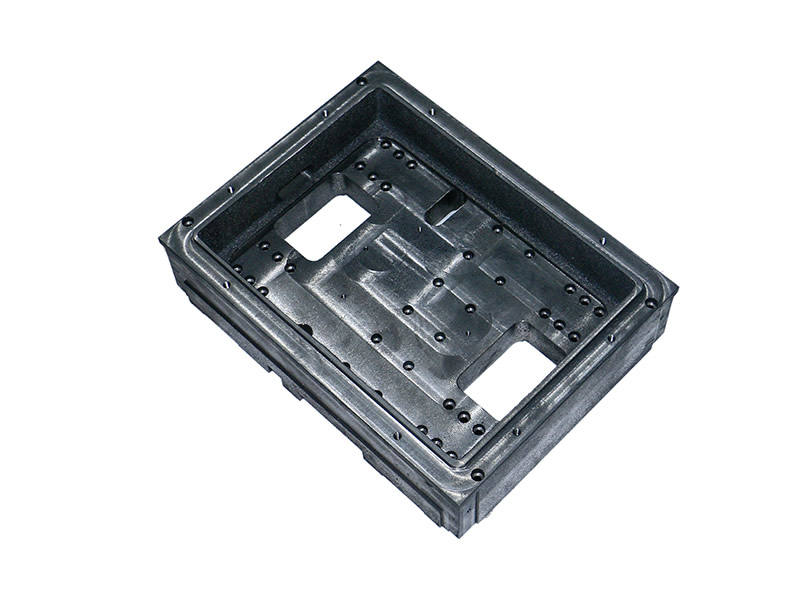
The pouring and cooling process determines the solidification structure of the casting. Excessive pouring temperature can lead to shrinkage and sand sticking, while excessively low temperature may result in cold insulation and insufficient pouring. The cooling rate affects the morphology and matrix structure of graphite. Thin walled areas cool quickly and are prone to forming fine crystals or white cast structures; The cooling of thick walled areas is slow, and the graphite is coarse. By setting up a reasonable sprue and riser system, sequential solidification can be guided to reduce shrinkage defects.
The cleaned castings can be subjected to heat treatment as needed. Annealing can eliminate white microstructure and improve workability; Normalization can increase the content of pearlite and increase strength; Aging treatment can eliminate casting stress and prevent deformation during use. Any parameter change in the above forming process may cause fluctuations in the performance of cast iron parts, so it is necessary to standardize and control each link.
This website uses cookies to ensure you get the best experience on our website.
 +86-18122995333
 1152033033@qq.com
 Whatsapp+86-18122995333

 Deutsch
  Español
  हिन्दी
  Italiano
  日本語
日本語  한국어
한국어  Português
  Русский
  Tiếng Việt



 Whatsapp