
When selecting copper castings in corrosion-resistant environments, it is necessary to comprehensively consider the type of corrosive medium, temperature, flow rate, and the stress state of the components. The corrosion resistance of different copper alloys varies in different environments, and selection should be based on existing application data or corrosion tests.
Seawater and saltwater environments are typical application scenarios for copper castings. Tin bronze has good corrosion resistance to seawater, especially under static or low flow conditions. Aluminum bronze exhibits superior corrosion and erosion resistance in seawater, making it suitable for high-speed seawater pipeline systems such as pump impellers, valve cores, and seawater filters. It should be noted that brass is prone to zinc removal corrosion in seawater. If brass must be selected, arsenic added brass or special heat treatment processes can be used to reduce the tendency for zinc removal.
In acidic environments, aluminum bronze has a certain tolerance to dilute sulfuric acid, dilute hydrochloric acid, and organic acids, but the corrosion rate increases significantly at higher concentrations. Tin bronze exhibits stability in some organic acids and weak acid media, but is not suitable for strong oxidizing acids. For environments containing ammonia or ammonium salts, the use of brass containing zinc should be avoided to prevent stress corrosion cracking.
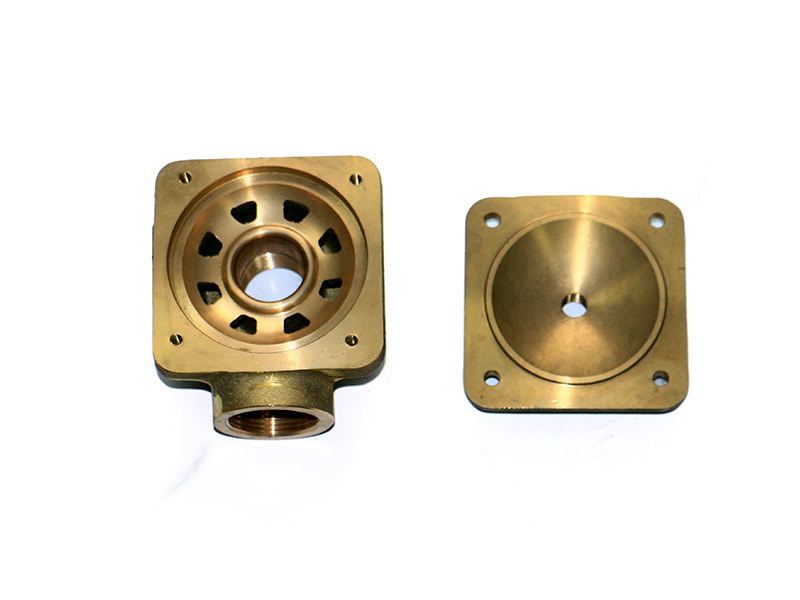
Corrosion in high-temperature environments requires consideration of oxidation and high-temperature creep. Aluminum bronze can form a dense oxide film at high temperatures and has better oxidation resistance than tin bronze. At the same time, when selecting cast copper parts, the issue of galvanic corrosion should also be considered. When copper castings come into contact with high potential metals such as stainless steel and titanium, copper alloys as cathodes are not easily corroded, but the corrosion of the anode metal in contact with them will accelerate.
The selection of copper castings in corrosive environments usually requires reference to the rate data in the corrosion manual, combined with the design life and maintenance cycle of the components to make a judgment. At critical locations, corrosion allowance can be reserved or coating protection measures can be adopted.
This website uses cookies to ensure you get the best experience on our website.
 +86-18122995333
 1152033033@qq.com
 Whatsapp+86-18122995333

 Deutsch
  Español
  हिन्दी
  Italiano
  日本語
日本語  한국어
한국어  Português
  Русский
  Tiếng Việt



 Whatsapp