
When the primary requirements for a component are electrical conductivity or wear resistance, cast copper parts are a viable material option. Copper has high electrical conductivity (approximately 100% IACS for annealed pure copper), and its strength, hardness, and wear resistance can be adjusted through alloying, although this results in a corresponding decrease in electrical conductivity.
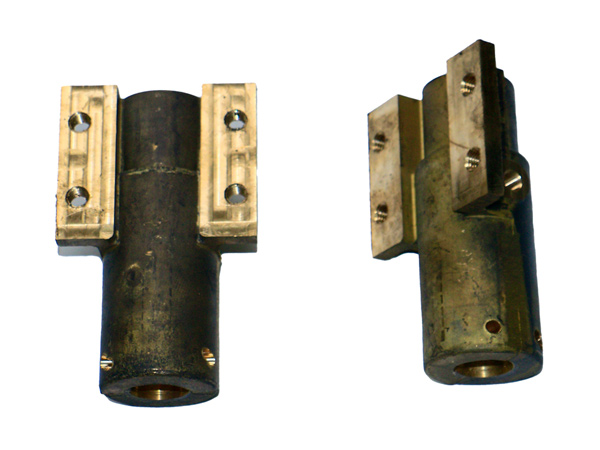
In components requiring high electrical conductivity, pure copper or low-alloy copper is commonly used. Pure copper castings (such as T2 and TU1) can achieve electrical conductivities of 85% IACS or higher, but they have low strength and generally poor castability. For conductive components requiring a certain level of strength, such as generator terminals, switch contacts, and arc welding electrodes, copper-chromium alloys or copper-zirconium alloys can be selected. These alloys maintain high electrical conductivity (above 70% IACS) while offering greater strength and resistance to softening than pure copper. Casting allows for the production of complex-shaped conductive components, such as irregularly shaped busbar connectors and contact holders.
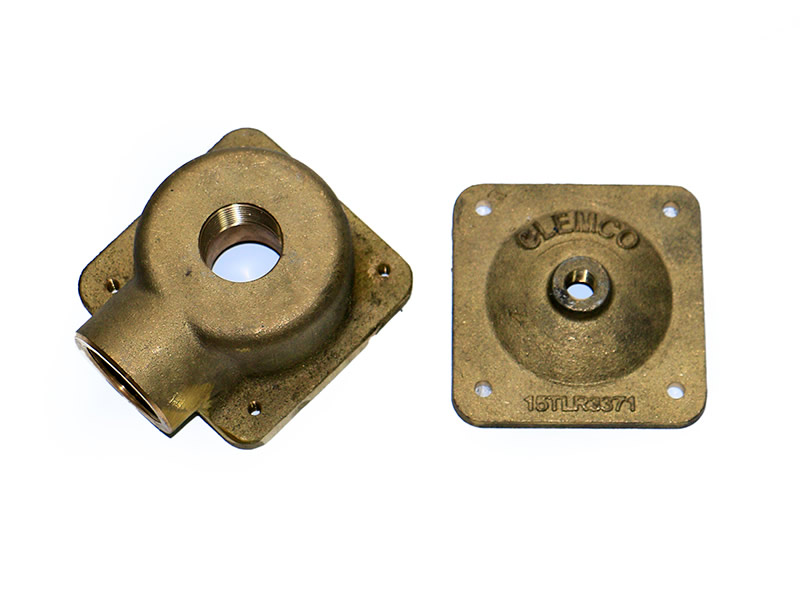
For components requiring high wear resistance, tin bronze, aluminum bronze, and lead bronze are common choices. Tin bronze (e.g., ZCuSn10Pb1, ZCuSn5Pb5Zn5) has a low coefficient of friction and good anti-seizing properties, making it suitable for sliding bearing liners, worm gears, and gears. The free lead particles in lead bronze act as solid lubricants, making it suitable for bearing shells under high-speed, heavy-load conditions. Aluminum bronze (e.g., ZCuAl10Fe3) offers high hardness and fatigue resistance, making it suitable for wear-resistant components subjected to impact loads, such as rolling mill nuts and construction machinery bushings.
Situations requiring both electrical conductivity and wear resistance are rare, but when both requirements coexist, a composite structure design or localized surface treatment on the cast copper component can be employed. For example, in conductive sliders or the sliding plates of tram pantographs, the use of cast copper alloys can meet both the requirements for electrical conductivity and sliding wear resistance. Overall, the selection of cast copper components requires a trade-off between electrical conductivity, strength, and wear resistance, with priority metrics determined based on the component’s primary failure modes.
This website uses cookies to ensure you get the best experience on our website.
 +86-18122995333
 1152033033@qq.com
 Whatsapp+86-18122995333

 Deutsch
  Español
  हिन्दी
  Italiano
  日本語
日本語  한국어
한국어  Português
  Русский
  Tiếng Việt



 Whatsapp